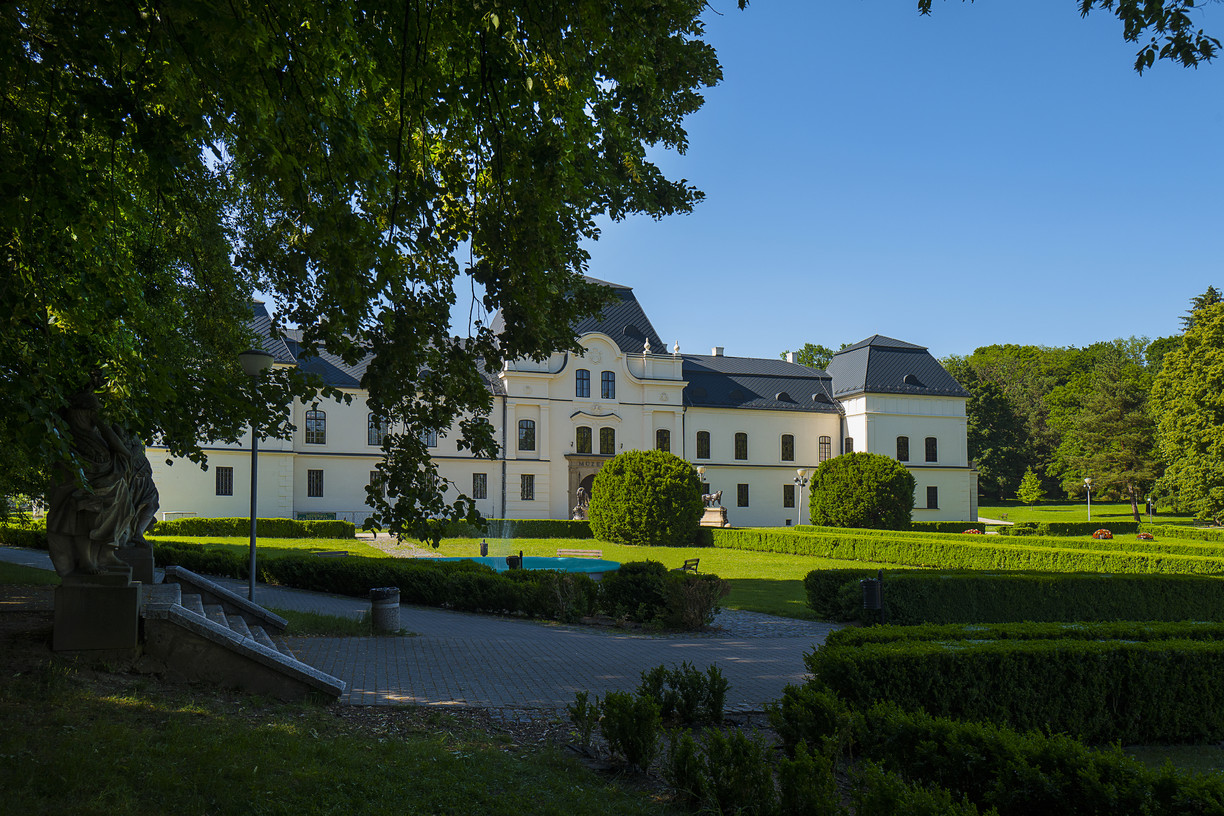
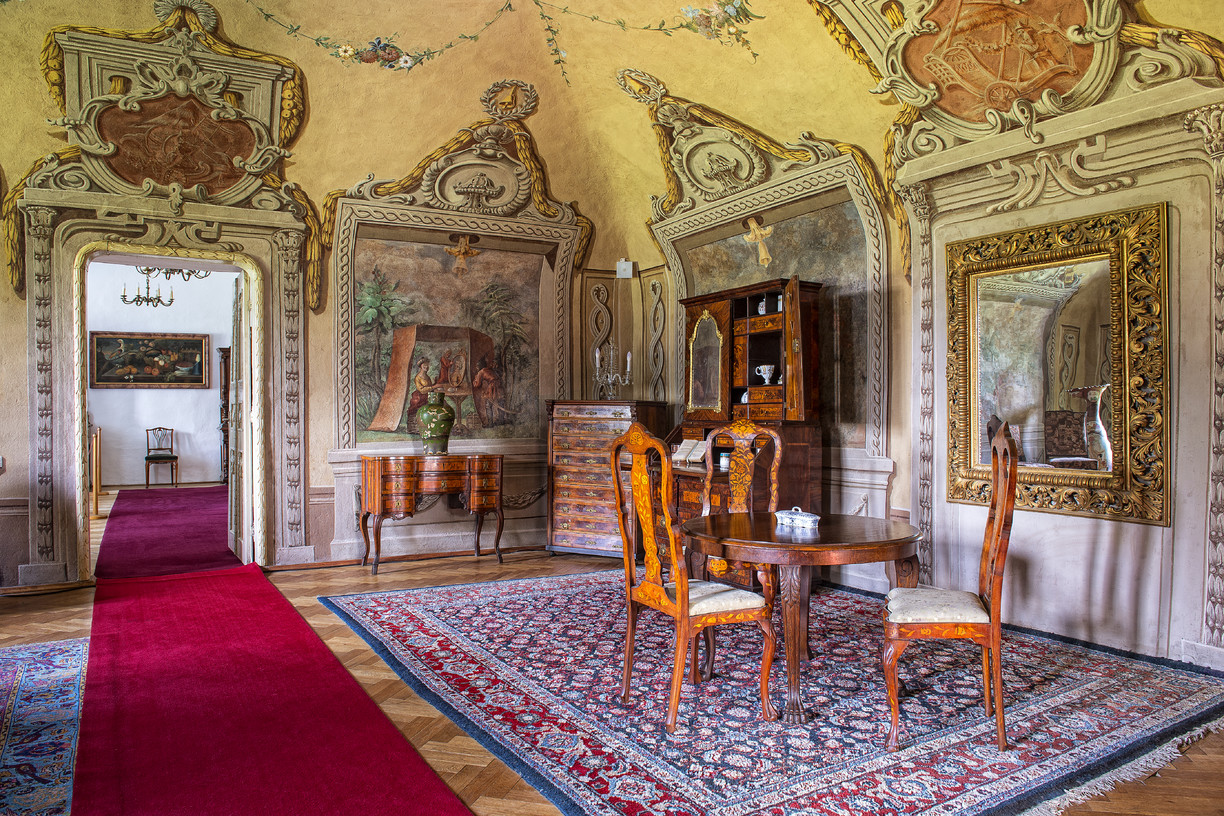
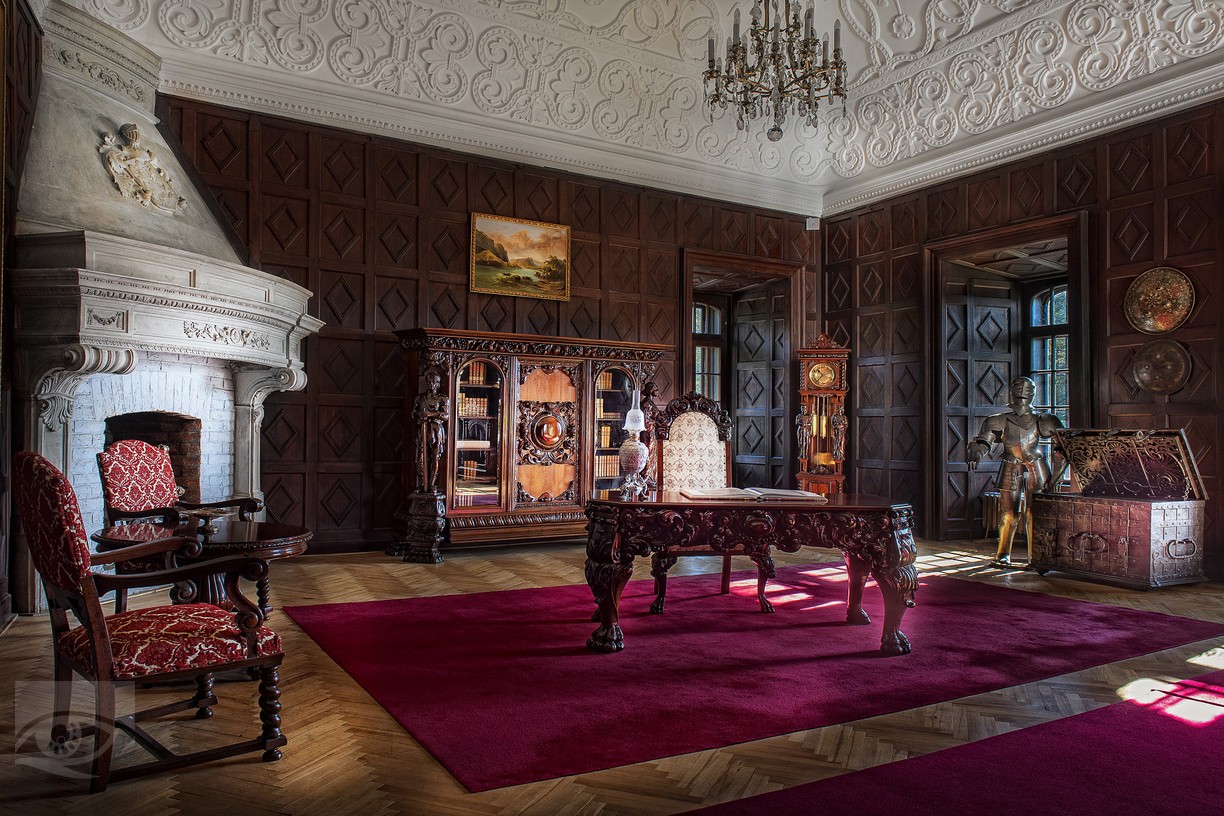
One of the many cultural monuments of Zemplín is Renaissance manor house in Humenne. The magnificent interior of the manor also includes Maria Theresa Room, ktorá má nezvyčajný osemuholníkový tvar a ukrýva pätoro tajných dverí. Neďaleký skanzen predstavuje život obyčajného dedinského ľudu. Objekty spravuje Vihorlatské múzeum v Humennom, ktoré ich naplnilo pútavými expozíciami.
Predchodcom kaštieľa bol už na prelome 12. a 13. storočia vodný hrad – stredoveká pevnosť, obklopená zo všetkých strán vodnou priekopou. Prvými známymi majiteľmi boli Drughetovci. Keď hrad v roku 1619 až do základov vyhorel, postavili na jeho mieste large four-winged manor house.
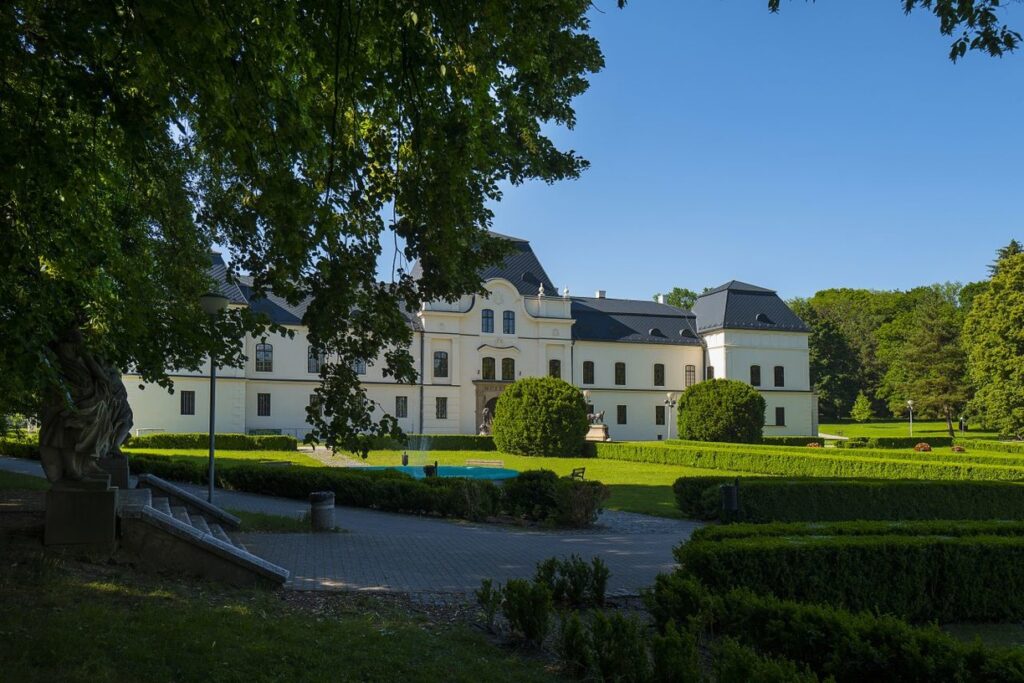
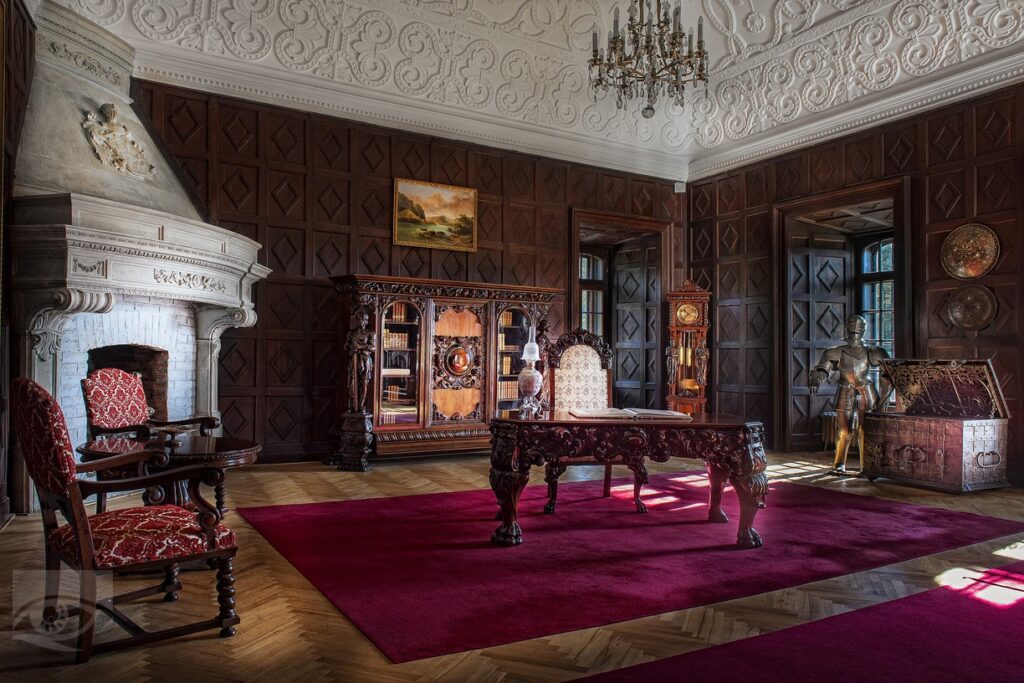
At the end of the 17th century the manor house passed into the hands of the Csáky family and at the beginning of the 19th century the Andrássy family became the owners. They embarked on an extensive reconstruction, after which the manor house took on a pseudo-form French Baroque manor houses - added English park with pond, Japanese gazebo a the entrance to the manor has been guarded ever since visitor favourites sculptures of the left and the left. The magnificent library has been given a wood panelled coffered ceiling.
At present, the manor house in Humenne is located Vihorlat Museum with rich expositions.
The art-historical exhibition offers a view of the nobility's living from the Renaissance to the 20th century. The individual rooms are full of gems and valuable exhibits.
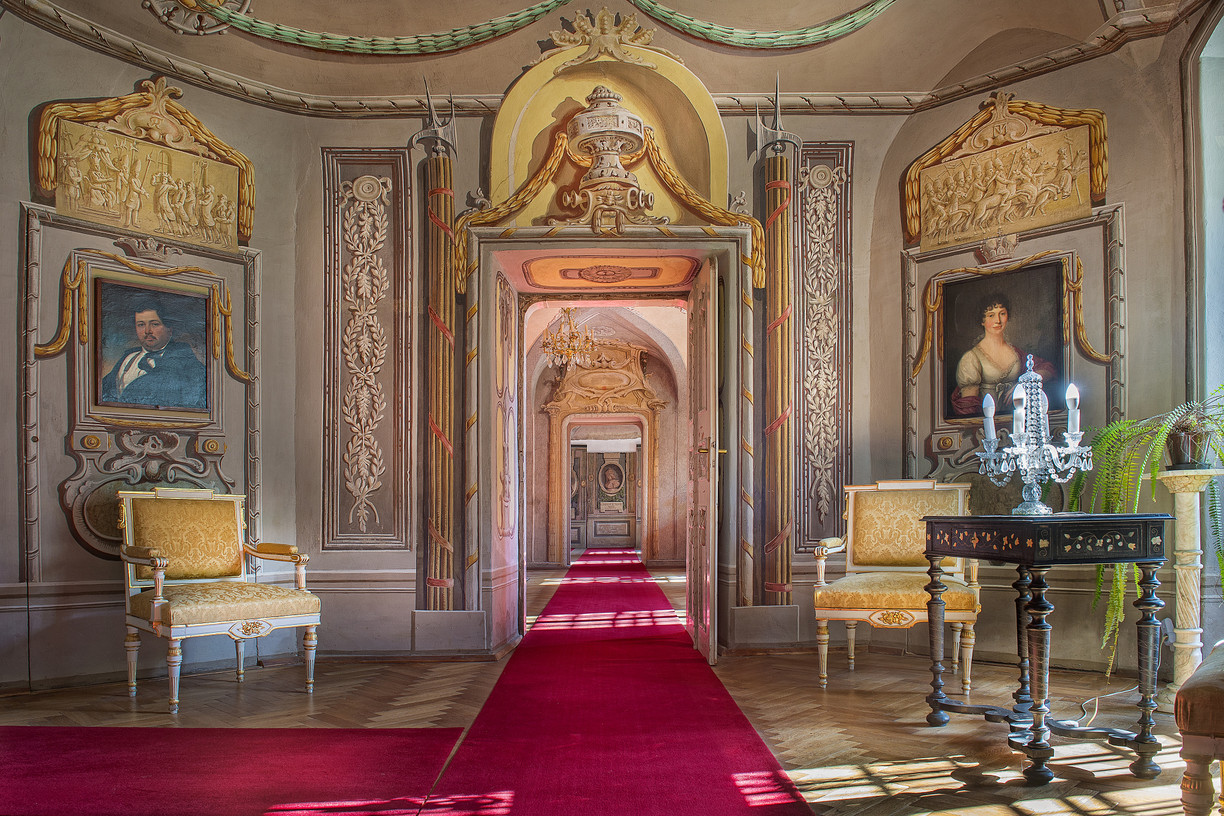
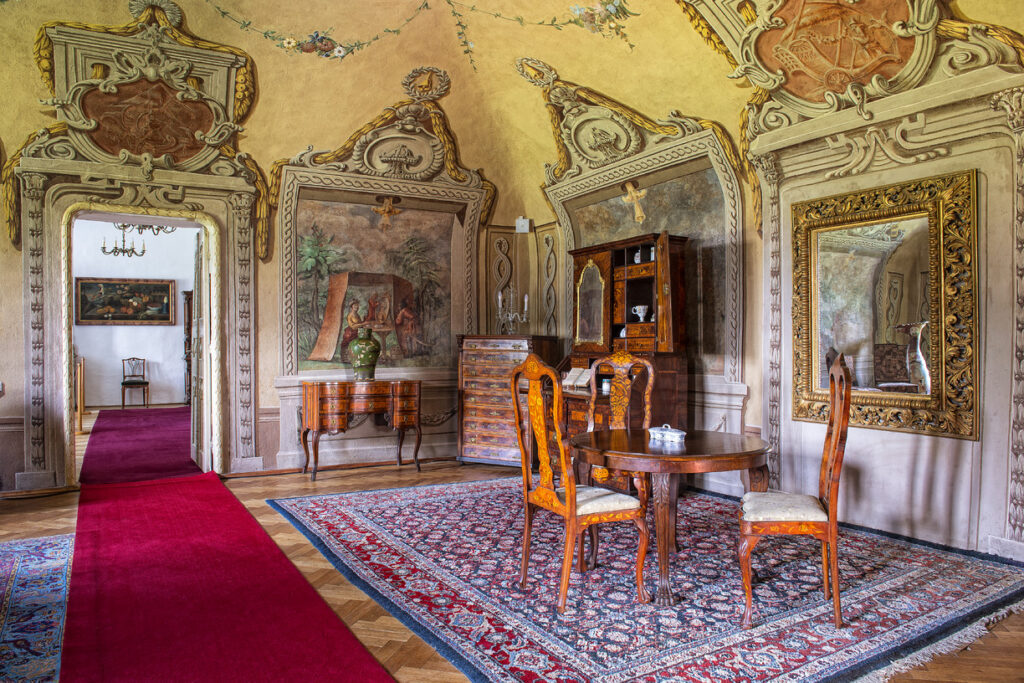
The most beautiful rooms include The Golden Salon, in which you will also find a gilded sofa set. The Oriental (Chinese) Room has a fresco on the ceiling depicting the reception of Arab envoys at the Chinese imperial court. The original vases and plates made of Chinese porcelain are also worthy of attention.
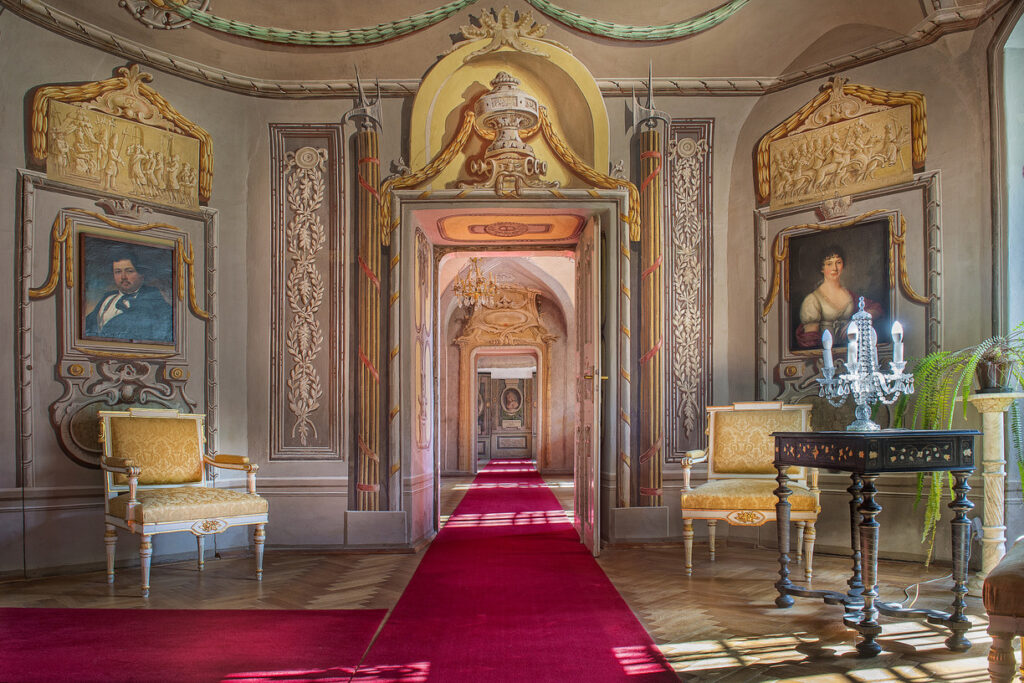
Extremely interesting is also Maria Theresa Room. Stropná maľba zobrazuje príchod cisárovnej Márie Terézie do brán mesta. Miestnosť má nezvyčajný 8-uholníkový tvar a pätoro tajných dverí ukrytých vo vstavaných skriniach. Mária Terézia však v Humennom nikdy nebola, a tak túto krásu nikdy nevidela. Majiteľ Štefan Csáky izbu vybudoval na jej počesť.
Visitors can also see a gallery of Hungarian kings, a collection of weapons and a unique treasure of Celtic-Dacian coins from the 2nd century BC.
Prírodovedná expozícia predstavuje návštevníkom živočíšstvo Horného Zemplína vrátane medveďa hnedého a zubra hrivnatého. Súčasťou kaštieľa je aj expozícia sakrálneho umenia s kaplnkou Panny Márie a Galerijná sieň Oresta Dubaya.
Skanzen – Expozícia ľudovej architektúry a bývania
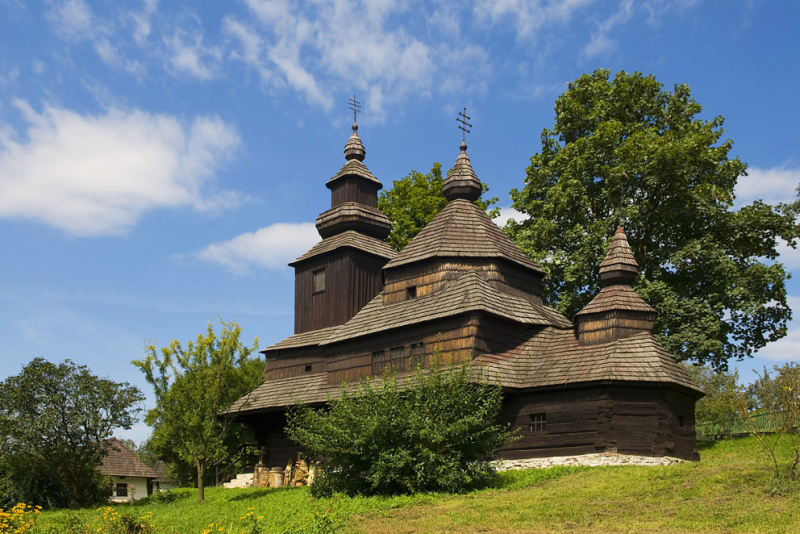
Near the manor house in the centre of the town there is an open-air museum with an exposition of folk architecture and housing. A total of 16 objects represent the distinctive architecture of the Eastern Carpathian region - wooden houses with traditional furnishings, farm buildings, a mill, a blacksmith's workshop, a well and craft and farm tools.
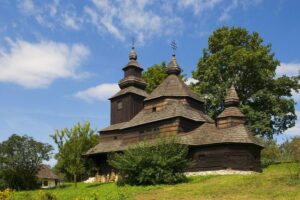
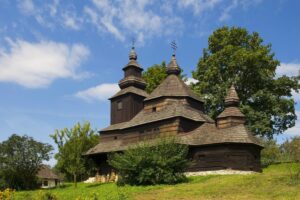
The dominant feature of the open-air museum is an authentic wooden Church of St. Michael the Archangel from Nová Sedlica from 1764. The church was originally made without a single metal nail. The most distinctive decorated part is the baroque etage iconostasis from the middle of the 18th century. It is a national cultural monument.
https://www.muzeumhumenne.sk/hodiny.html