The Municipal Museum in Stakčín was originally supposed to be located in the manor house. The initiators of this idea were the then mayor Ján Kerekanič, the cultural officer of the municipality Miroslav Bober (the current mayor) and the regional historian and municipal deputy Miroslav Buraľ. All three of them did not want to abandon the idea.
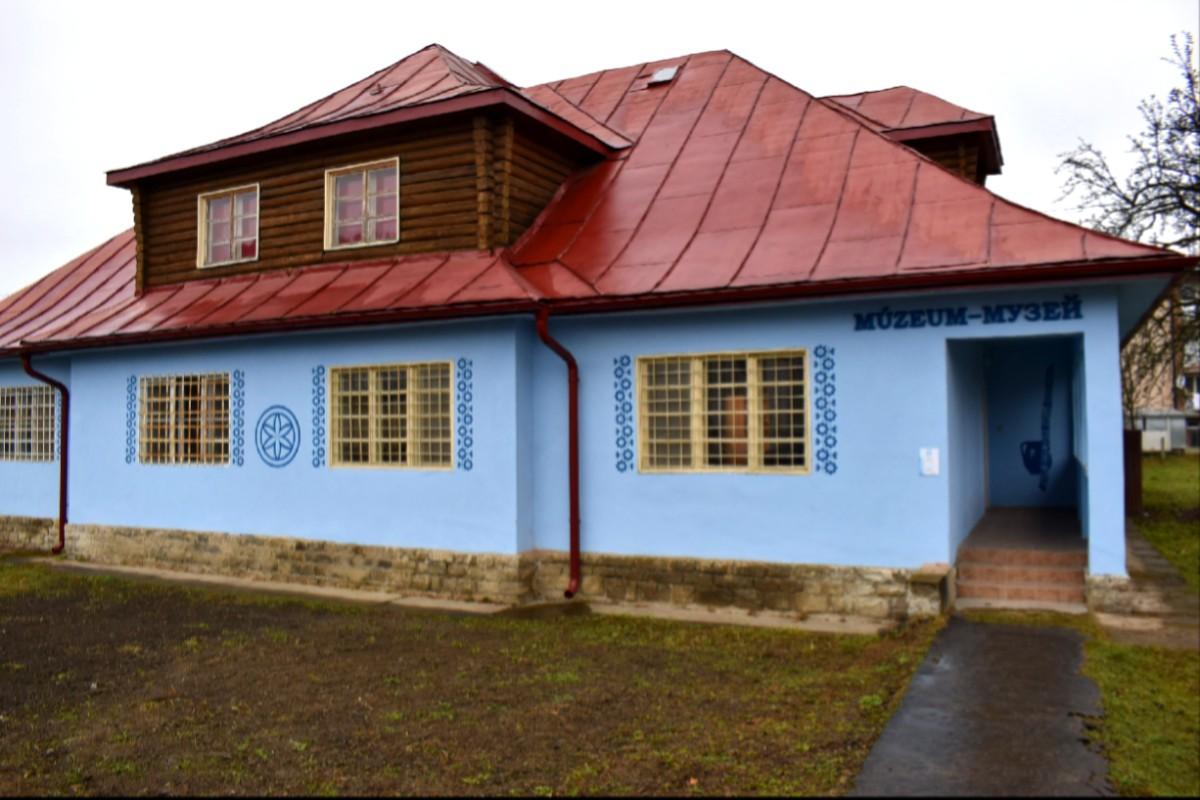
In the centre of the village there is a former police building, which later served as a meeting room of the municipal office and a pensioners' club. The building was built in 1939 during the so-called Small War, when the Hungarians had a guardhouse in it. At that time, there was a state border between Snina and Stakčín.
The building, which was in poor condition, was slowly repaired by the municipality from its own funds. Miroslav Bober together with Miroslav Bural collected artefacts from people in the surrounding villages to display in the museum. People were happy to support this idea, they wanted to contribute to the preservation of traditions for future generations. The Military History Club and the Hodošík Rifle Club also helped with the furnishing of the museum, providing artefacts of 20th century military history and participating in their installation.
In the museum you will also find a traditional village room with a bed, wardrobe, table or crockery. The rarest is a wooden chest called a lada, which is about two hundred years old. It is hand carved with a significant ornament - the Slavic flower of life.
The museum also includes tools and implements commonly used in households and agricultural work, as well as a beehive and a mill for grinding grain. In the future, two rooms should be added to the building. One will be dedicated to travelling exhibitions, the other will be for educational activities. Not only tourists will be able to learn various crafts. For example, they will be able to try making wooden shingles, weaving linen, combing flax, basket weaving, making clay objects and others.
The museum is for all those who like to go back in time. It is interesting mainly because you can try the exhibited artifacts and take them in your hands. As the initiators of its creation say, "it is living history". Admission is free.
Opening hours of the museum: Wednesday and Friday from 13:00 to 15:00 h.
In the area of the primary school they are planning to build a mini-visitor centre in the future, in which they will build a wheelwright's and blacksmith's workshop from 1898 from Kolbasov and a wooden house from Topole, which has been dismantled and treated so far.